LONDON — A triumphant U.K. Labour Party is headed back to power in Britain after winning a historic landslide election victory over the ruling Conservatives.
In the early hours of Friday morning, Tory Prime Minister Rishi Sunak conceded his party had lost the snap election he called six weeks ago and said Labour would form the next government.
The scale of the result is extraordinary, with Labour on course for a 170-seat majority in the House of Commons — the biggest since Tony Blair’s famous win in 1997.
It means Britain’s new PM will be 61-year-old human rights lawyer Keir Starmer, who has transformed his party’s fortunes after 14 years in the political wilderness. He will be appointed prime minister by King Charles at Buckingham Palace on Friday.
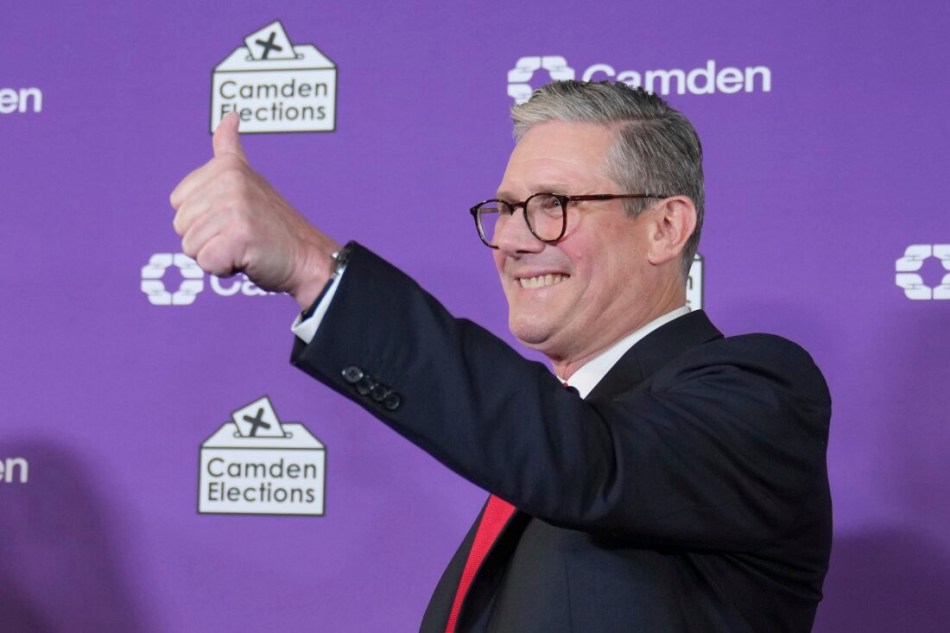
“We did it!” a beaming Starmer declared at a raucous victory rally in London in the early hours of the morning.
“Across the country people will be waking up to the news relieved that a burden has been lifted, a weight lifted from the shoulders of this great nation. The sunshine of hope is returning to our great country.”
For the Tories, the result — though widely predicted — is crushing, a disastrous end to PM Rishi Sunak’s audacious snap election gambit. It looks likely the Tories will collapse to the lowest total in the party’s illustrious history.
Outgoing PM Sunak called Starmer in the early hours of the morning to concede defeat.
“The Labour Party has won this election,” Sunak said. “The British people have delivered a sobering verdict and I take responsibility for the loss.”
A Labour victory in the U.K. bucks the trend of center-left decline in many prosperous Western economies. Growing numbers of voters in countries including France, Italy and Germany have embraced the far-right at recent elections. In France, the party of Marine Le Pen is one step away from taking power in parliamentary elections for the first time in a vote this Sunday.
That trend was on show in the U.K., too — albeit not to the same extent as elsewhere.
Right-wing populist Nigel Farage won a seatin the House of Commons at the eighth attempt, with his upstart Reform UK party projected to win millions of votes. Reform’s biggest impact, however, was to deny the Tories dozens of normally-safe seats around the country by splitting the right-wing vote and allowing Labour or the centrist Lib Dems to claim the prize.
This Tory bloodbath swept away many key Conservative figures. Former Prime Minister Liz Truss lost her seat in a humiliating defeat which saw her seemingly-impregnable 26,195 majority overturned by Labour. The Conservatives lost many other heartland seats, including those previously held by former prime ministers Boris Johnson, Theresa May and David Cameron.
The first high-profile Cabinet casualty of the night was Grant Shapps, the defense secretary.
He blamed his own party’s recent record of infighting for putting voters off. The public, he said, were sick of the “endless political soap opera” and the “internal rivalries and divisions” that warring Conservatives have played out in public.
“It’s not so much that Labour won this election, but rather that the Conservatives have lost it,” said Shapps, clearly shaken by his ousting.
Arch Brexiteer Jacob Rees-Mogg and Commons Leader Penny Mordaunt — widely considered a likely future leadership contender if she had held her seat — were also kicked out.
The scale of Labour’s victory makes Starmer the U.K.’s most powerful leader since Blair, with complete command of parliament and a second term beckoning in five years’ time.
Over the course of the six-week campaign, Starmer urged voters to give him their backing and “turn the page” on years of scandal, division and economic turmoil under former PMs Johnson and Truss.
The Labour leader was regularly criticized for his pedestrian debating style and for giving few details of his plans for power. But none of that mattered in the end — simply not being a Tory seemed to be enough for many voters, with pollsters identifying a widespread public mood for change.
Farage triumphs
In his own acceptance speech in the seaside resort of Clacton, Reform UK Leader Farage hailed a “truly extraordinary” result and vowed to “build a mass national movement over the next few years” to challenge Labour for power at the next election, expected in 2029.
“Something very fundamental is happening,” Farage declared. “There is a massive gap in the center-right of British politics, and my job is to fill it.” He added: “This is just the first step of something that is going to stun all of you.”
Elsewhere, a long-awaited revival finally arrived for the centrist Liberal Democrats, who are back as Britain’s third-largest party and have so far won 71 seats — the party’s best ever result — after almost a decade of obscurity.
But there was bleak news for the once-mighty Scottish National Party.
In 2019, the pro-Scottish independence SNP won 48 of Scotland’s 57 Westminster seats. But the SNP so far have just 8 MPs elected, a disaster for a party which has dominated Scottish politics since 2015 — but has faced a series of scandals and declining popularity in recent years.
Speaking on ITV, the former Scottish First Minister Nicola Sturgeon said there were “questions that need to be asked” about how the SNP became so detached from its voter base.
Delight and relief for Labour
In private Labour Party officials struggled to contain their glee, having witnessed their party suffer four miserable election defeats at the hands of the Tories since 2010. All the pre-election polls had pointed to a landslide win, but after so long in the wilderness aides had taken nothing for granted.
In private Labour Party officials struggled to contain their glee, having witnessed their party suffer four miserable election defeats at the hands of the Tories since 2010. All the pre-election polls had pointed to a landslide win, but after so long in the wilderness aides had taken nothing for granted.
“Delighted and relieved,” said one. “You don’t know paranoia like Labour members.”
Within Tory circles the blame game was already underway, with key figures blaming global crises like Covid-19 as well as Sunak and his ill-fated campaign. The outgoing PM is certain to quit as Tory leader after the defeat, triggering a bitter struggle over the future direction of the party.
Some outgoing ministers immediately pointed the finger squarely at Sunak and his top aides, like Party Chair Richard Holden and Deputy PM Oliver Dowden.
“No two ways about it, it’s a catastrophic comedown even from the turn of the year,” an outgoing Tory minister said. “Holden, Dowden and other over-promoted ex-[advisers] who steered us at full tilt into this iceberg should be exiled to Ascension … or somewhere a little more remote.”
Asked about his party’s future, defeated Tory Steve Baker said there will “undoubtedly be recriminations, there will be shock, there will be anger, there will be denial.”
But other Tories were simply relieved the result was not even more dramatic. Some pre-election polls suggested the party could effectively be wiped from the electoral map. “I had feared worse,” a second outgoing Tory minister admitted.
“It’s a disaster for the Tories — but it’s not the complete catastrophe that some were predicting,” said Tim Bale, professor of politics at Queen Mary University of London, and author of “The Conservative Party after Brexit.”
“They will be spooked, though, by what looks like a strong showing from Reform. The question is: Will that see them swing even further to the populist right than they have already?”
The night was not without its reversals for Labour, amid some unexpected results across the U.K. Anger at Labour’s position of Gaza — with Starmer slower than some activists wanted to call for an immediate ceasefire — cost the party seats in key urban areas around the country.
One of Starmer’s top lieutenants — Shadow Paymaster General Jonathan Ashworth — lost his seat to an independent running on a pro-Gaza ticket.
And former Labour Leader Jeremy Corbyn — now running as an independent after he was kicked out of Labour — also successfully defended his Islington North seat in the face of a Labour challenge. Corbyn spoke passionately about the conflict in Gaza in his acceptance speech.


 MDW Live! News Network
LONDON — A triumphant U.K. Labour Party is headed back to power in Britain after winning a historic landslide election victory over the ruling Conservatives.
In the early hours of Friday morning, Tory Prime Minister Rishi Sunak conceded his party had lost the snap election he called six weeks ago and said Labour would form the next government.
The scale of the result is extraordinary, with Labour on course for a 170-seat majority in the House of Commons — the biggest since Tony Blair’s famous win in 1997.
It means Britain’s new PM will be 61-year-old human rights lawyer Keir Starmer, who has transformed his party’s fortunes after 14 years in the political wilderness. He will be appointed prime minister by King Charles at Buckingham Palace on Friday.
“We did it!” a beaming Starmer declared at a raucous victory rally in London in the early hours of the morning.
“Across the country people will be waking up to the news relieved that a burden has been lifted, a weight lifted from the shoulders of this great nation. The sunshine of hope is returning to our great country.”
For the Tories, the result — though widely predicted — is crushing, a disastrous end to PM Rishi Sunak’s audacious snap election gambit. It looks likely the Tories will collapse to the lowest total in the party’s illustrious history.
Outgoing PM Sunak called Starmer in the early hours of the morning to concede defeat.
“The Labour Party has won this election,” Sunak said. “The British people have delivered a sobering verdict and I take responsibility for the loss.”
A Labour victory in the U.K. bucks the trend of center-left decline in many prosperous Western economies. Growing numbers of voters in countries including France, Italy and Germany have embraced the far-right at recent elections. In France, the party of Marine Le Pen is one step away from taking power in parliamentary elections for the first time in a vote this Sunday.
That trend was on show in the U.K., too — albeit not to the same extent as elsewhere.
Right-wing populist Nigel Farage won a seatin the House of Commons at the eighth attempt, with his upstart Reform UK party projected to win millions of votes. Reform’s biggest impact, however, was to deny the Tories dozens of normally-safe seats around the country by splitting the right-wing vote and allowing Labour or the centrist Lib Dems to claim the prize.
This Tory bloodbath swept away many key Conservative figures. Former Prime Minister Liz Truss lost her seat in a humiliating defeat which saw her seemingly-impregnable 26,195 majority overturned by Labour. The Conservatives lost many other heartland seats, including those previously held by former prime ministers Boris Johnson, Theresa May and David Cameron.
The first high-profile Cabinet casualty of the night was Grant Shapps, the defense secretary.
He blamed his own party’s recent record of infighting for putting voters off. The public, he said, were sick of the “endless political soap opera” and the “internal rivalries and divisions” that warring Conservatives have played out in public.
“It’s not so much that Labour won this election, but rather that the Conservatives have lost it,” said Shapps, clearly shaken by his ousting.
Arch Brexiteer Jacob Rees-Mogg and Commons Leader Penny Mordaunt — widely considered a likely future leadership contender if she had held her seat — were also kicked out.
The scale of Labour’s victory makes Starmer the U.K.’s most powerful leader since Blair, with complete command of parliament and a second term beckoning in five years’ time.
Over the course of the six-week campaign, Starmer urged voters to give him their backing and “turn the page” on years of scandal, division and economic turmoil under former PMs Johnson and Truss.
The Labour leader was regularly criticized for his pedestrian debating style and for giving few details of his plans for power. But none of that mattered in the end — simply not being a Tory seemed to be enough for many voters, with pollsters identifying a widespread public mood for change.
Farage triumphs
In his own acceptance speech in the seaside resort of Clacton, Reform UK Leader Farage hailed a “truly extraordinary” result and vowed to “build a mass national movement over the next few years” to challenge Labour for power at the next election, expected in 2029.
“Something very fundamental is happening,” Farage declared. “There is a massive gap in the center-right of British politics, and my job is to fill it.” He added: “This is just the first step of something that is going to stun all of you.”
Elsewhere, a long-awaited revival finally arrived for the centrist Liberal Democrats, who are back as Britain’s third-largest party and have so far won 71 seats — the party’s best ever result — after almost a decade of obscurity.
But there was bleak news for the once-mighty Scottish National Party.
In 2019, the pro-Scottish independence SNP won 48 of Scotland’s 57 Westminster seats. But the SNP so far have just 8 MPs elected, a disaster for a party which has dominated Scottish politics since 2015 — but has faced a series of scandals and declining popularity in recent years.
Speaking on ITV, the former Scottish First Minister Nicola Sturgeon said there were “questions that need to be asked” about how the SNP became so detached from its voter base.
Delight and relief for Labour
In private Labour Party officials struggled to contain their glee, having witnessed their party suffer four miserable election defeats at the hands of the Tories since 2010. All the pre-election polls had pointed to a landslide win, but after so long in the wilderness aides had taken nothing for granted.
In private Labour Party officials struggled to contain their glee, having witnessed their party suffer four miserable election defeats at the hands of the Tories since 2010. All the pre-election polls had pointed to a landslide win, but after so long in the wilderness aides had taken nothing for granted.
“Delighted and relieved,” said one. “You don’t know paranoia like Labour members.”
Within Tory circles the blame game was already underway, with key figures blaming global crises like Covid-19 as well as Sunak and his ill-fated campaign. The outgoing PM is certain to quit as Tory leader after the defeat, triggering a bitter struggle over the future direction of the party.
Some outgoing ministers immediately pointed the finger squarely at Sunak and his top aides, like Party Chair Richard Holden and Deputy PM Oliver Dowden.
“No two ways about it, it’s a catastrophic comedown even from the turn of the year,” an outgoing Tory minister said. “Holden, Dowden and other over-promoted ex-[advisers] who steered us at full tilt into this iceberg should be exiled to Ascension … or somewhere a little more remote.”
Asked about his party’s future, defeated Tory Steve Baker said there will “undoubtedly be recriminations, there will be shock, there will be anger, there will be denial.”
But other Tories were simply relieved the result was not even more dramatic. Some pre-election polls suggested the party could effectively be wiped from the electoral map. “I had feared worse,” a second outgoing Tory minister admitted.
“It’s a disaster for the Tories — but it’s not the complete catastrophe that some were predicting,” said Tim Bale, professor of politics at Queen Mary University of London, and author of “The Conservative Party after Brexit.”
“They will be spooked, though, by what looks like a strong showing from Reform. The question is: Will that see them swing even further to the populist right than they have already?”
The night was not without its reversals for Labour, amid some unexpected results across the U.K. Anger at Labour’s position of Gaza — with Starmer slower than some activists wanted to call for an immediate ceasefire — cost the party seats in key urban areas around the country.
One of Starmer’s top lieutenants — Shadow Paymaster General Jonathan Ashworth — lost his seat to an independent running on a pro-Gaza ticket.
And former Labour Leader Jeremy Corbyn — now running as an independent after he was kicked out of Labour — also successfully defended his Islington North seat in the face of a Labour challenge. Corbyn spoke passionately about the conflict in Gaza in his acceptance speech.
Share this: