An Australian man has been charged with murder over the massacre of 49 people at two mosques inChristchurchon Friday.
Brenton Harrison Tarrant, 28, appeared in the Christchurch district court on Saturday morning.
He is accused of murdering a man, whose name was suppressed by Judge Paul Kellar on grounds of undue hardship to his family.
No application for bail was made. Tarrant was remanded in custody without plea to the high court in Christchurch on 5 April.
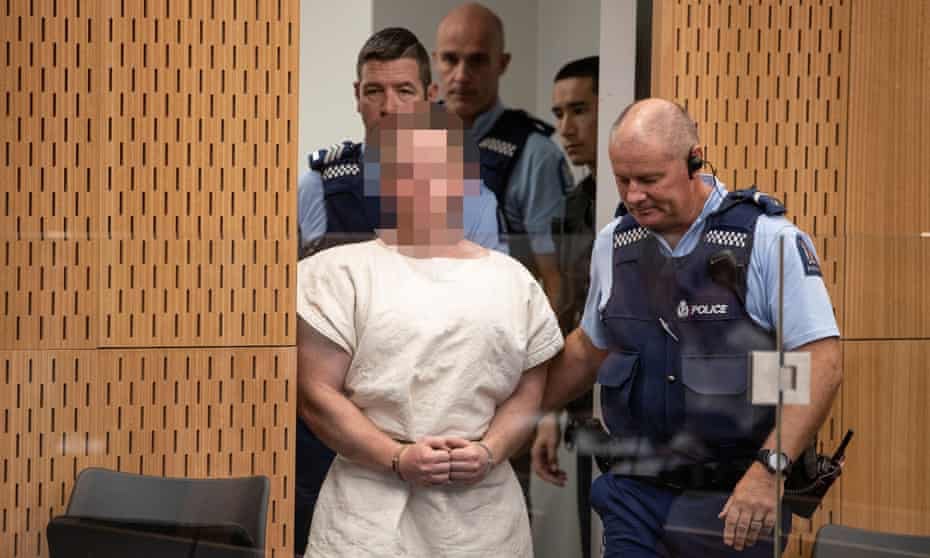
He appeared in court in white prison clothing, handcuffed and barefoot. He did not speak.
After Tarrant left the court, the judge said that while “there is one charge of murder brought at the moment, it is reasonable to assume that there will be others”.
Earlier,New Zealandpolice commissioner Mike Bush said Tarrant had been charged with one count of murder, with other charges to follow.
“I want to reassure all New Zealanders that we are doing absolutely everything in our power to respond to this attack, and deploying all available resources in communities across New Zealand,” Bush said.
Tarrant, who grew up in the New South Wales town of Grafton, had been living in the southern city of Dunedin, about 360km south of Christchurch.
New Zealand police closed the Christchurch court to the public over security concerns, but the media was able to attend.
Australian police are investigating Tarrant’s connections around Grafton.
“I can advise that he was not known to authorities here in terms of extremism and those sorts of issues,” acting deputy commissioner Mick Willing said.
The right-wing extremist who filmed himself on a rampage that left 49 mosque-goers dead flashes a white power sign as he appears in a New Zealand court charged with murder
NSW police commissioner Mick Fuller said Australian police would investigate to help New Zealand authorities and also “make sure that he hasn’t slipped through the cracks” in Australia, but said there were “no links back to New South Wales at the moment”.
The city has united in grief in grief, with floral tributes being laid at mosques across the country, including at the botanic gardens close to the sites of both attacks. Religious leaders and charitable organisations have flocked to the area to offer support.
Prime minister Jacinda Ardern has said the nation’s gun laws will change after it emerged the suspect had a firearms licence. She said he began legally stockpiling weapons in 2017 and had two semi-automatic weapons and two shotguns.
Two boys, aged two and 13, are among the 36 injured being treated at Christchurch hospital, with 12 operating theatres working through the night. Most of the injured will need multiple operations, said chief of surgery Greg Robertson. Four for the 49 people who were killed died on the way to hospital.
A heightened police presence is visible across the country, including at mosques and public events, and the public have been urged to remain vigilant. Commissioner Mike Bush said: “We are not searching for anyone posing a threat but that doesn’t mean that they don’t exist.” The main suspect, one of four who were initially arrested, was taken into custody 36 minutes after the first emergency calls came in.
Leaders from around the world, including the Queen as head of state, have offered their condolences to those affected. Donald Trump offered sympathy and comfort during a call to Ardern but has separately said white nationalism is “not really” a growing threat when asked about the issue in light of Friday’s shooting.
Global reaction
“It is clear that this can now only be described as a terrorist attack,” Ms Ardern told reporters.
German Chancellor Angela Merkel said she mourned “with New Zealanders for their fellow citizens who were attacked and murdered out of racist hatred while peacefully praying in their mosques”.
And French President Emmanuel Macron called it an “odious attack” and said France stood “against any form of extremism”.
Media Coverage
The massacre of at least 49 people in a terror attack in New Zealand has dominated newspaper front pages across the globe. Here is how they covered it.
New Zealand
The country’s media has marked the gun massacre at two mosques in Christchurch as “one of darkest days” in the country’s history.
The Press, Christchurch’s most prominent newspaper – and one of the largest circulation papers in New Zealand – has a striking front page, showing survivors and declaring the attack to have brought about the “end of innocence”. It is a common theme among domestic papers.
UK
The Guardian focused on the white supremacist views expressed by the man charged with murder and notes that social media firms have been criticised for their role.


 MDW Live! News Network
An Australian man has been charged with murder over the massacre of 49 people at two mosques in Christchurch on Friday.
Brenton Harrison Tarrant, 28, appeared in the Christchurch district court on Saturday morning.
He is accused of murdering a man, whose name was suppressed by Judge Paul Kellar on grounds of undue hardship to his family.
No application for bail was made. Tarrant was remanded in custody without plea to the high court in Christchurch on 5 April.
He appeared in court in white prison clothing, handcuffed and barefoot. He did not speak.
After Tarrant left the court, the judge said that while “there is one charge of murder brought at the moment, it is reasonable to assume that there will be others”.
Earlier, New Zealand police commissioner Mike Bush said Tarrant had been charged with one count of murder, with other charges to follow.
“I want to reassure all New Zealanders that we are doing absolutely everything in our power to respond to this attack, and deploying all available resources in communities across New Zealand,” Bush said.
Tarrant, who grew up in the New South Wales town of Grafton, had been living in the southern city of Dunedin, about 360km south of Christchurch.
New Zealand police closed the Christchurch court to the public over security concerns, but the media was able to attend.
Australian police are investigating Tarrant’s connections around Grafton.
“I can advise that he was not known to authorities here in terms of extremism and those sorts of issues,” acting deputy commissioner Mick Willing said.
NSW police commissioner Mick Fuller said Australian police would investigate to help New Zealand authorities and also “make sure that he hasn’t slipped through the cracks” in Australia, but said there were “no links back to New South Wales at the moment”.
The city has united in grief in grief, with floral tributes being laid at mosques across the country, including at the botanic gardens close to the sites of both attacks. Religious leaders and charitable organisations have flocked to the area to offer support.
Global reaction
“It is clear that this can now only be described as a terrorist attack,” Ms Ardern told reporters.
German Chancellor Angela Merkel said she mourned “with New Zealanders for their fellow citizens who were attacked and murdered out of racist hatred while peacefully praying in their mosques”.
And French President Emmanuel Macron called it an “odious attack” and said France stood “against any form of extremism”.
Media Coverage
The massacre of at least 49 people in a terror attack in New Zealand has dominated newspaper front pages across the globe. Here is how they covered it.
New Zealand
The country’s media has marked the gun massacre at two mosques in Christchurch as “one of darkest days” in the country’s history.
The Press, Christchurch’s most prominent newspaper – and one of the largest circulation papers in New Zealand – has a striking front page, showing survivors and declaring the attack to have brought about the “end of innocence”. It is a common theme among domestic papers.
UK
The Guardian focused on the white supremacist views expressed by the man charged with murder and notes that social media firms have been criticised for their role.
Share this: