The number of deaths in the Libyan city of Derna could range from 18,000 to 20,000 following catastrophic flooding, according to the city’s mayor.
Abdulmenam Al-Ghaithi told al-Arabiya TV yesterday this could be based on the number of wiped-out districts in the city.
Emergency workers in Libya are in a “race against time” to bury the dead from the flood in Derna to prevent disease, the Libyan Ambulance and Emergency Service has told Al-Hadath TV.
It says one of the hospitals in Derna city was filled with bodies which had to be removed for burial.
Samples are taken from the bodies for DNA analysis.
“This gives you an indication of the limited infrastructure in Libya. The storm hit Greece as well as Libya. But in Greece, there were six deaths and in Libya 6,000,” Salah Aboulgasem, deputy director of partner development at Islamic Relief, told Al Jazeera.
Rescue teams have been able to enter several remote areas in Derna and Sousse but an Al-Hadath correspondent says there are some parts that are still difficult to reach.
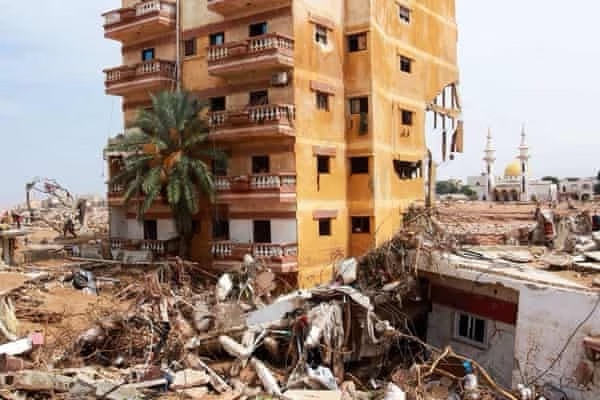
All that is left of much of Derna is the rubble of collapsed buildings and the bodies of people killed in the floods, a photographer based in the eastern city has told the BBC.
Taha Muftah told Newshour on the World Service that the sound of the dams collapsing was like an air strike or heavy gunfire.
Muftah says he is fortunate to live in the eastern side of Derna, which is on a hill and was spared the worst of the floods.
The photojournalist says rescuers have arrived and are “doing their best and giving all their efforts”, but they lack the necessary equipment and experience to deal with the scale of the disaster.
Experts had warned the dams were at risk of collapse since 2011 but “nobody did anything about it”, he adds.
The Turkish Red Crescent has compared Derna “to an earthquake”.
Deputy director Ibrahim Ozer told BBC Radio 4’s The World Tonight the damage looked like it had been caused by an earthquake.
“I’ve been to many disasters including floods, wildfires and earthquakes but this one is quite different,” he said. “The storm struck the city quite hard.”
The team, who spent more than six hours travelling from the Libyan city of Benghazi, recently arrived in Derna where two dams burst due to heavy rainfall submerging whole areas.
A global effort to assist Libya’s countless victims also gathered pace on Thursday. On Wednesday evening, a Turkish ship carrying equipment to set up two field hospitals in Libya with 148 medical staff left the city of Izmir, according to Turkey’s Health Minister Fahrettin Koca.
That is in addition to three aircraft of humanitarian aid, as well as rescue and medical teams Ankara sent on Tuesday.
A naval vessel from Italy is also expected to head to Libya on Thursday to provide logistical and medical support.
Several other countries and bodies, including Algeria, Egypt, France, Iran, Jordan, Kuwait, Qatar, the UAE, the United Kingdom, the United States, the United Nations, and the European Union, have helped in numerous ways from militarily to medically in recent days.
Organisations like Islamic Relief are also working with local partners and have begun funding distributions of essential aid such as food, blankets, and mattresses.
“Islamic Relief is going to be focusing our intervention in Bayda, one of the surrounding towns,” said Aboulgasem. “We cannot get in by road to Derna. Nobody can, the road doesn’t exist. So we’re helping the people that have got out of there.”


 MDW Live! News Network
The number of deaths in the Libyan city of Derna could range from 18,000 to 20,000 following catastrophic flooding, according to the city’s mayor.
Abdulmenam Al-Ghaithi told al-Arabiya TV yesterday this could be based on the number of wiped-out districts in the city.
Emergency workers in Libya are in a “race against time” to bury the dead from the flood in Derna to prevent disease, the Libyan Ambulance and Emergency Service has told Al-Hadath TV.
It says one of the hospitals in Derna city was filled with bodies which had to be removed for burial.
Samples are taken from the bodies for DNA analysis.
“This gives you an indication of the limited infrastructure in Libya. The storm hit Greece as well as Libya. But in Greece, there were six deaths and in Libya 6,000,” Salah Aboulgasem, deputy director of partner development at Islamic Relief, told Al Jazeera.
Rescue teams have been able to enter several remote areas in Derna and Sousse but an Al-Hadath correspondent says there are some parts that are still difficult to reach.
All that is left of much of Derna is the rubble of collapsed buildings and the bodies of people killed in the floods, a photographer based in the eastern city has told the BBC.
Taha Muftah told Newshour on the World Service that the sound of the dams collapsing was like an air strike or heavy gunfire.
Muftah says he is fortunate to live in the eastern side of Derna, which is on a hill and was spared the worst of the floods.
The photojournalist says rescuers have arrived and are “doing their best and giving all their efforts”, but they lack the necessary equipment and experience to deal with the scale of the disaster.
Experts had warned the dams were at risk of collapse since 2011 but “nobody did anything about it”, he adds.
The Turkish Red Crescent has compared Derna “to an earthquake”.
Deputy director Ibrahim Ozer told BBC Radio 4’s The World Tonight the damage looked like it had been caused by an earthquake.
“I’ve been to many disasters including floods, wildfires and earthquakes but this one is quite different,” he said. “The storm struck the city quite hard.”
The team, who spent more than six hours travelling from the Libyan city of Benghazi, recently arrived in Derna where two dams burst due to heavy rainfall submerging whole areas.
A global effort to assist Libya’s countless victims also gathered pace on Thursday. On Wednesday evening, a Turkish ship carrying equipment to set up two field hospitals in Libya with 148 medical staff left the city of Izmir, according to Turkey’s Health Minister Fahrettin Koca.
That is in addition to three aircraft of humanitarian aid, as well as rescue and medical teams Ankara sent on Tuesday.
A naval vessel from Italy is also expected to head to Libya on Thursday to provide logistical and medical support.
Several other countries and bodies, including Algeria, Egypt, France, Iran, Jordan, Kuwait, Qatar, the UAE, the United Kingdom, the United States, the United Nations, and the European Union, have helped in numerous ways from militarily to medically in recent days.
Organisations like Islamic Relief are also working with local partners and have begun funding distributions of essential aid such as food, blankets, and mattresses.
“Islamic Relief is going to be focusing our intervention in Bayda, one of the surrounding towns,” said Aboulgasem. “We cannot get in by road to Derna. Nobody can, the road doesn’t exist. So we’re helping the people that have got out of there.”
Share this: