

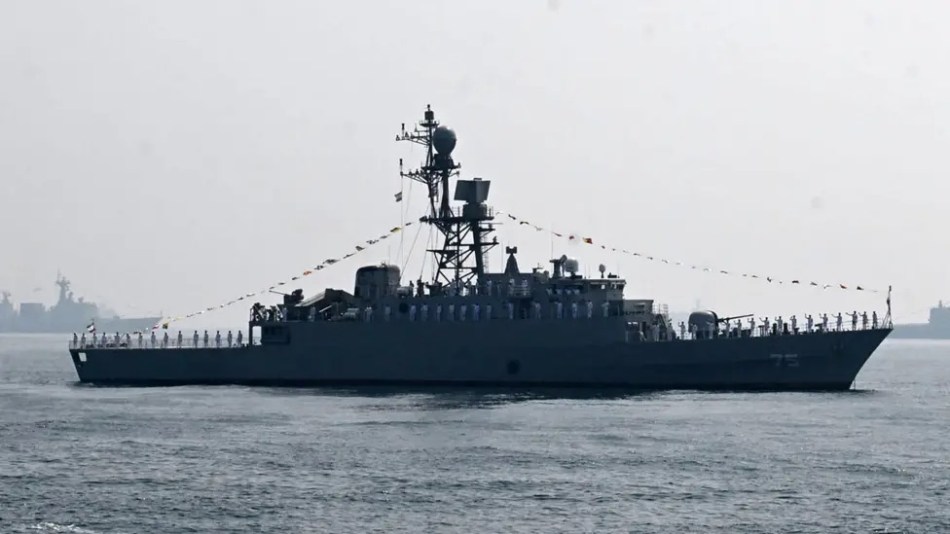
Colombo — The widening conflict involving Iran, Israel and the United States has now reached the waters of the Indian Ocean, unexpectedly placing Sri Lanka at the centre of a rapidly escalating geopolitical crisis.
The situation intensified after the Iranian naval frigate IRIS Dena was sunk in international waters south of Sri Lanka, prompting a major search-and-rescue operation by the Sri Lankan Navy and Air Force. The vessel reportedly sent distress signals while operating near Sri Lanka’s southern maritime approaches, leading Colombo to dispatch naval vessels and aircraft to rescue survivors.
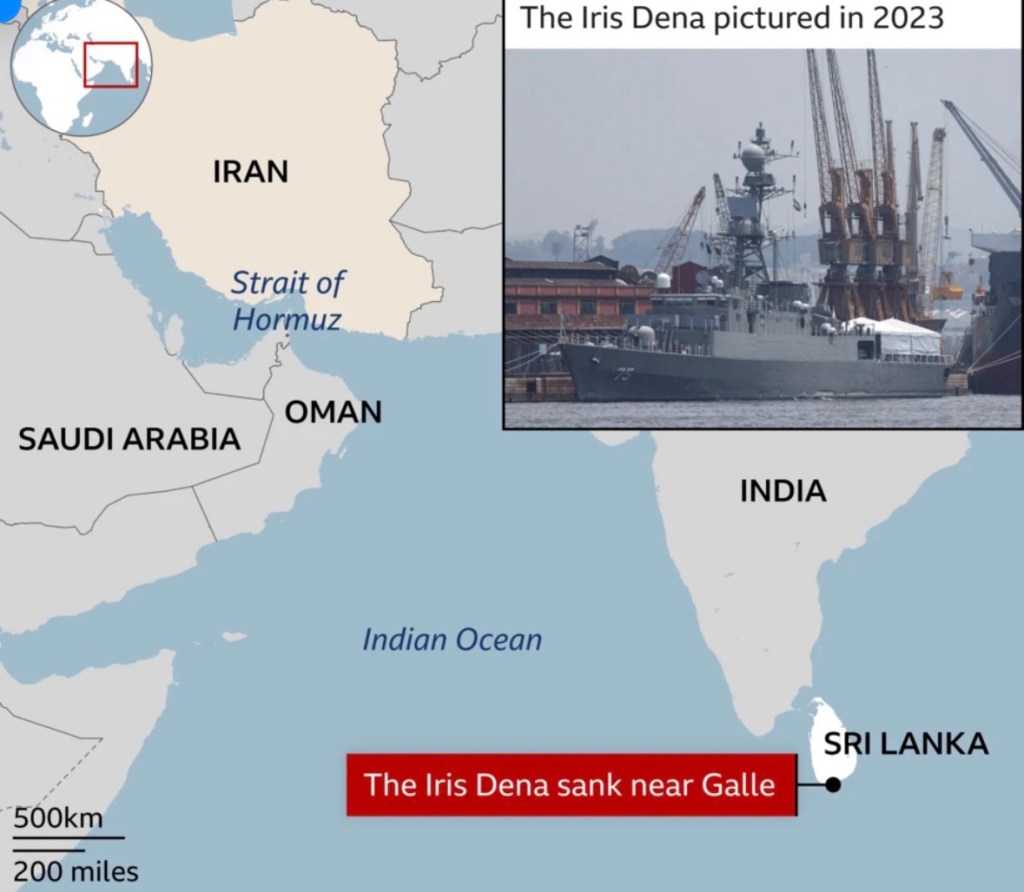
The dramatic incident has drawn global attention to Sri Lanka’s strategic location along major maritime routes and forced the government to navigate a delicate diplomatic moment as tensions between major powers spill into the Indian Ocean.
Colombo’s swift response
Authorities in Colombo moved quickly after receiving the distress call from the Iranian ship.
Sri Lanka’s navy and Air Force launched an immediate rescue mission, deploying ships and surveillance aircraft to the area. Survivors were pulled from the water and transported to hospitals in the south of the island, while search operations continued for missing crew members.
Sri Lankan officials say 87 bodies were recovered and 32 people rescued from the roughly 180 people believed to have been on board IRIS Dena sunk on Wednesday.
Cabinet spokesperson Nalinda Jayatissa told parliament the vessel was positioned near Colombo, inside Sri Lanka’s exclusive economic zone but beyond its territorial waters, adding that authorities were doing “their utmost to safeguard lives”.
The developments came as Washington confirmed it had torpedoed the IRIS Dena, an Iranian frigate returning from a peacetime naval exercise hosted by India, marking the first time a US submarine has sunk an enemy warship by torpedo since the second world war.
Sri Lankan coastguards received a distress call from the IRIS Dena at 5:08am on Wednesday (23:28 GMT on Tuesday), with surviving crew describing an explosion. Rescue vessels arrived to find the frigate already gone, navy spokesperson Buddhika Sampath said, with only an oil slick and floating life rafts remaining at the scene.
Thirty-two survivors, all seriously injured, were taken to Galle National Hospital. Eighty-seven bodies were recovered from the sea, Sri Lanka’s Foreign Minister Vijitha Herath said. More than 10 sailors remain missing.
The frigate, which was carrying about 180 crew, had been sailing home after participating in a major multinational naval exercise in the Bay of Bengal involving ships from 74 countries when it was struck roughly 44 nautical miles (81km) off Sri Lanka’s southern coast.
Government officials emphasised that the operation was conducted under international maritime conventions requiring assistance to vessels in distress.
Second ship
Sri Lanka also took control of a second Iranian naval vessel off its coast, a day after the US sunk an Iranian warship in the same waters.
The vessel, the Irins Bushehr, had requested on Wednesday to dock at one of Sri Lanka’s ports as one of its engines had malfunctioned. Some 208 members of the vessel have been evacuated.
Sri Lanka allowed it to dock at a north-eastern port after hours of discussion, with its president saying they would “never hesitate to protect humanity”.
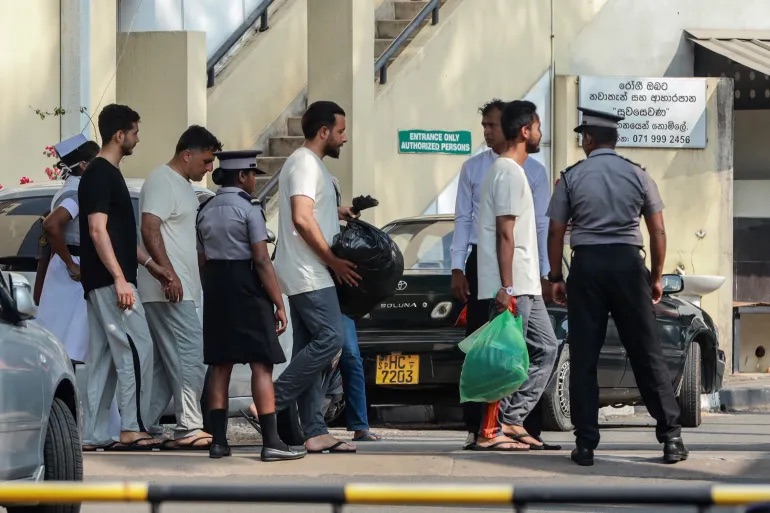
The crew members of the Iris Bushehr – which include 53 officers, 84 cadet officers, 48 senior sailors and 23 sailors, however, will be brought to Colombo.
President Dissanayake outlines Sri Lanka’s stance
President Anura Kumara Dissanayake addressed the unfolding crisis and sought to clarify Sri Lanka’s position as international scrutiny intensified.
In a press conference, the President stressed that the country’s response was purely humanitarian and that Sri Lanka would remain neutral in the broader conflict.
“We are not taking sides in this war. Our responsibility is to save lives and ensure that Sri Lanka’s territory, waters and airspace are not used for military purposes by any party,” he said.
He added that Sri Lanka would continue to act in accordance with international law while safeguarding its national interests and maritime security.
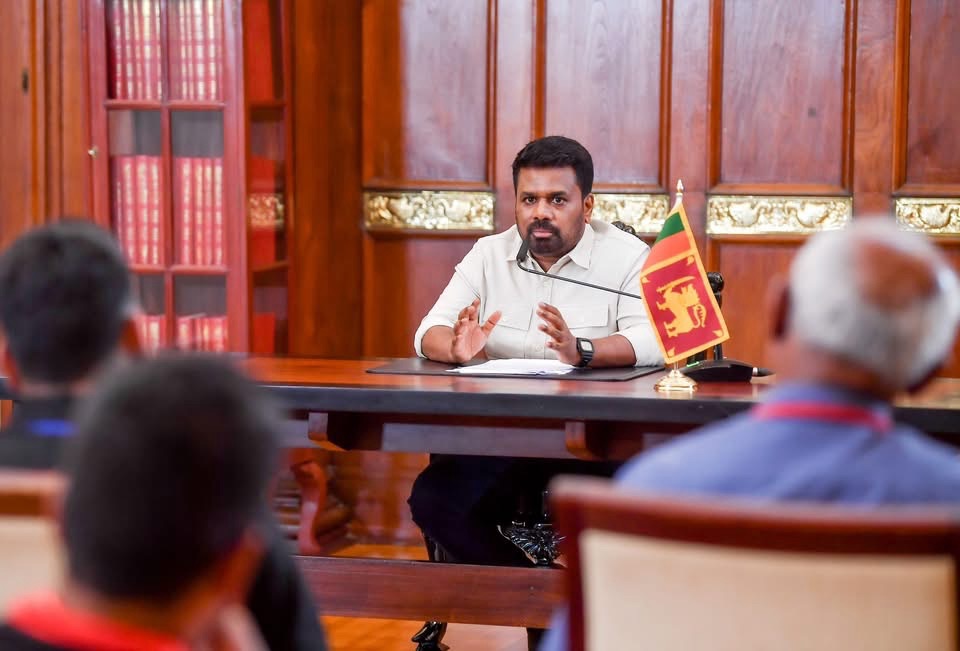
The President also revealed that the government had engaged in diplomatic communication with several countries involved in the crisis in order to prevent the situation from escalating further in Sri Lanka’s vicinity.
Officials noted that Sri Lanka’s handling of the crisis reflects the country’s long-standing policy of maintaining balanced relations with competing global powers while prioritising regional stability.
Regional shockwaves and India’s political fallout
The incident has sparked significant political debate in neighbouring India, particularly because the Iranian warship had recently participated in naval engagements hosted by India before beginning its return journey through the Indian Ocean.
Opposition leader Rahul Gandhi criticised the government of Prime Minister Narendra Modi, arguing that the conflict had effectively reached India’s strategic neighbourhood and that New Delhi had not adequately responded to the crisis.
“The conflict has reached our backyard,” Gandhi said, accusing the government of remaining silent despite the geopolitical implications of the attack.
The controversy intensified after reports confirmed that the Iranian vessel had attended naval exercises in India shortly before it was sunk. Critics questioned whether the ship had reduced its operational readiness during the visit, as vessels participating in multinational exercises are often subject to protocols limiting combat readiness.
Some commentators argued that India should at least issue a strong diplomatic response given that the ship had recently been hosted in Indian waters.
Foreign policy analysts in India have offered differing views. Some have suggested New Delhi is deliberately maintaining strategic silence in order to avoid being drawn into the conflict between Iran and the United States, both of which are important partners for India.
India relies heavily on security cooperation with the United States while also maintaining longstanding energy and strategic ties with Iran. Analysts say any public position could complicate these relationships.
Others argue that India’s muted response reflects a broader strategy of avoiding escalation in the Indian Ocean while quietly monitoring developments.
Still, the political pressure on the Modi government has increased, with critics claiming that India cannot remain silent when a warship it recently hosted becomes the centre of a major international military incident so close to its maritime sphere of influence.
Sri Lanka’s unexpected strategic moment
For Sri Lanka, the incident marks a significant geopolitical crises to occur near its waters in recent years.
Located along vital maritime corridors in the Indian Ocean, the island nation has long been considered strategically important for global trade and naval movement. The current crisis has reinforced that reality.
Sri Lanka’s swift humanitarian response and careful diplomatic messaging have been closely watched by regional observers, who note that the country has managed to balance assistance with neutrality.
 MDW Live! News Network
0 comments on “From bystander to first responder: Sri Lanka thrust into Middle East crisis as India face criticism for silence”