

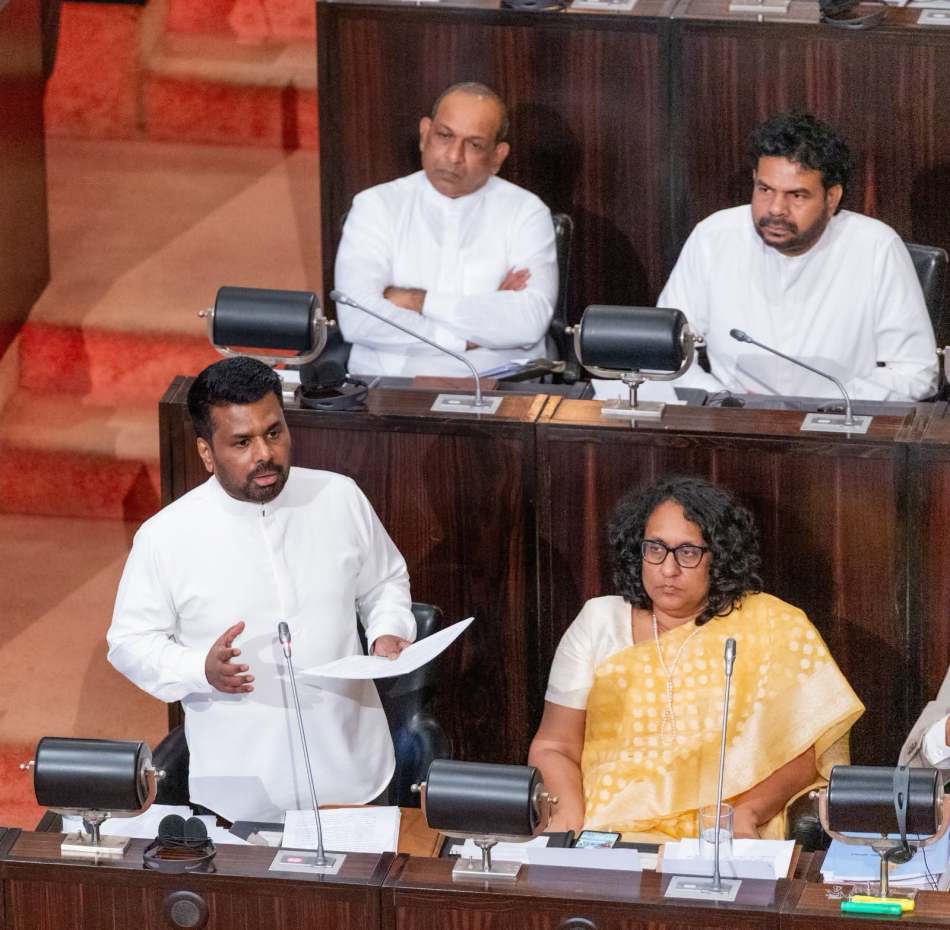
COLOMBO, November 12, 2026 – President Anura Kumara Dissanayake today presented the National People’s Power (NPP) Government’s third Budget, outlining an ambitious economic programme aimed at accelerating growth, attracting investment, strengthening domestic production and easing the financial burden on households.
The 2027 Budget seeks to move Sri Lanka beyond the economic stabilisation achieved under the International Monetary Fund (IMF) programme towards a new phase of economic transformation, while maintaining fiscal discipline and reducing public debt.
The Government has proposed total expenditure of Rs. 7.933 trillion against estimated revenue and grants of Rs. 6.18 trillion, resulting in a projected budget deficit of Rs. 1.753 trillion, equivalent to approximately 4.5% of GDP.
Tax relief for salaried employees
One of the major highlights is the proposed reduction in personal income tax for salaried workers.
The annual tax-free income threshold will increase from Rs. 1.8 million to Rs. 1.95 million, raising the monthly tax-free allowance from Rs. 150,000 to Rs. 162,500.
The revised tax structure is expected to provide additional monthly tax relief ranging from Rs. 750 to Rs. 15,750, depending on income levels. The maximum personal income tax rate of 36% will apply to annual earnings exceeding Rs. 5.2 million.
The Government has also proposed removing VAT on exercise books, textbooks, dictionaries and other printed educational materials, while reducing taxes on selected imported food products to ease household expenses.
Rs. 2 trillion for public investment
A significant feature of the Budget is the allocation of Rs. 2 trillion for public investment, marking a major push towards infrastructure development and economic expansion.
Priority areas include roads, railways, rural infrastructure, transport connectivity, logistics, agriculture and post-disaster reconstruction.
The Government is also seeking to strengthen private-sector participation through investment incentives and public-private partnerships, particularly in energy, ports, tourism and industrial development.
Support for public servants and vulnerable groups
The Budget has allocated Rs. 110 billion to finance the final phase of public-sector salary revisions and improvements to selected allowances.
Social welfare has also received considerable attention, with Rs. 230 billion allocated for the Aswesuma programme.
Monthly allowances for kidney patients and persons with disabilities are set to increase by Rs. 2,500 to Rs. 12,500, providing additional assistance to vulnerable communities.
Boosting SMEs and foreign investment
Small and medium-sized enterprises (SMEs) are expected to benefit from Rs. 67.7 billion allocated for interest subsidies and refinancing arrangements, facilitating approximately Rs. 174 billion in concessional loans.
The loans, carrying interest rates between 3% and 5%, will target SMEs, women-led businesses, rural agricultural enterprises and the fisheries sector.
To attract foreign investment, the Government has proposed enhanced capital allowances for qualifying export manufacturing and tourism projects exceeding US$3 million.
Plans also include establishing a Treasury-owned investment promotion company and accelerating approvals for strategic commercial investments.
Tourism and capital market development
The tourism sector is among the industries targeted for additional support, with the Government proposing to abolish the Tourism Development Levy from April 1, 2027, to improve the country’s competitiveness as a regional tourism destination.
The Budget also introduces measures to encourage greater public participation in the Colombo Stock Exchange, including a proposed programme to provide eligible students with share portfolios worth up to Rs. 10,000.
Fiscal discipline and IMF commitments
Despite the additional spending and tax concessions, the Government faces the challenge of maintaining fiscal discipline.
The 2027 Budget comes as Sri Lanka’s current IMF Extended Fund Facility programme approaches its scheduled conclusion in March 2027. Maintaining revenue targets, controlling expenditure and continuing debt-restructuring commitments will remain important to securing international confidence.
The Government is also considering a successor IMF programme to maintain economic stability beyond the current arrangement.
Implementation remains the biggest challenge
While the Budget sets ambitious targets for infrastructure development, investment and economic growth, its success will largely depend on the Government’s ability to implement the proposed projects.
Sri Lanka has previously struggled to fully utilise its allocated capital expenditure due to bureaucratic delays, procurement difficulties and administrative bottlenecks.
The proposed Rs. 2 trillion investment programme will therefore require improved public-sector efficiency and faster project implementation to deliver the expected economic benefits.
A decisive year for Sri Lanka’s economy
The 2027 Budget represents an attempt by the NPP Government to transition from economic recovery towards long-term growth, with greater emphasis on investment, production, exports, infrastructure and social protection.
However, the projected Rs. 1.753 trillion deficit highlights the continuing fiscal challenges facing the country.
Whether the Budget delivers meaningful improvements in living standards, employment opportunities and private-sector growth will ultimately depend on how effectively its proposals are implemented and whether the Government can balance economic expansion with financial stability.


0 comments on “Sri Lanka’s 2027 Budget; President shifts focus to economic growth, tax relief and record public investment”